What no film school website will tell you
Barcelona offers a wider range of film and audiovisual training options than it might initially seem. There are public and private institutions, general and specialized programs, two-year courses and two-week programs, online classes, and opportunities for filming on location. Choosing the right course isn't easy, especially when all the websites say more or less the same thing.
These are the questions you should ask yourself before making a decision.
What exactly do you want to learn?
The first important distinction is between technical training and creative training, although in practice the best schools work on both at the same time.
If your goal is to work professionally in production, directing, or screenwriting, you need a long-term program with a structured curriculum, internships, and official accreditation. If you're looking to improve specific skills—editing, cinematography, sound recording—an intensive course may be sufficient.
Identifying that starting point correctly saves time and money.
Official qualification or private certificate
In Spain, officially recognized film studies are Higher Level Vocational Training Cycles (CFGS) and university degrees. Both require passing entrance exams and have a minimum duration of two years. The qualifications they award are recognized in the job market and, in many cases, grant access to scholarships or public funding.
Private certificates, on the other hand, are valued according to the reputation of the institution and the actual quality of the training. They are not inherently inferior, but it's important not to confuse them with official qualifications.
Who teaches the classes
This is probably the most important criterion and the most difficult to evaluate from the outside.
A faculty comprised of active professionals—directors with released films, sound engineers working on film sets, and cinematographers with ongoing careers—ensures that what is learned in the classroom corresponds to what happens on set. Technical knowledge becomes outdated quickly in the audiovisual industry; those who continue working in the industry constantly update their skills.
It's worth looking up the professors' names, seeing what projects they've done, and when the last one was.
Access to equipment
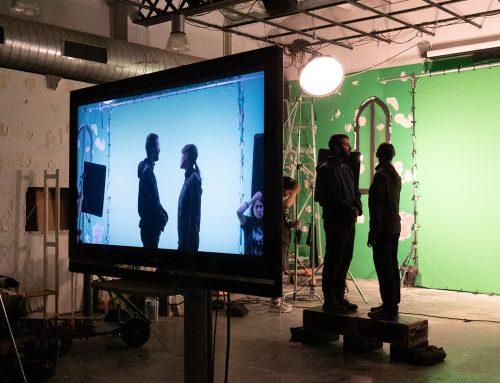
Knowing how to operate a camera in a classroom is different from working with it in real production conditions. The same applies to sound, lighting, and editing.
Ask what equipment the center has, whether students use it from day one or only in the later years, and what the ratio of equipment to students is. Some centers have top-of-the-line equipment but very limited access due to class size.
The size of the group
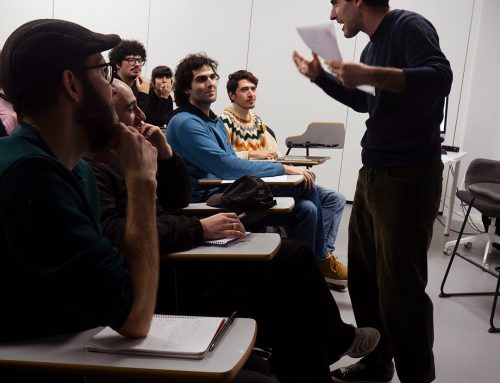
In filmmaking, learning involves doing. And doing means real-time experience in front of the equipment, on set, in the editing room. Large groups dilute that experience. A classroom of forty people doesn't work the same way as one of twelve when the goal is to film an exercise or do a sound mix.
Asking about the number of students per group is one of the first things you should do at any open house.
The student profile
Studying alongside people with diverse backgrounds and interests offers invaluable educational benefits that are difficult to quantify. The diversity of experiences and perspectives enriches teamwork and opens up viewpoints that a more homogeneous education does not.
Some schools receive students from very different backgrounds —geographic, cultural, professional— and that is noticeable in the work environment and in the quality of the projects.
The relationship with the industry
For most, the ultimate goal of any audiovisual training program is to enter the job market. External internships, agreements with production companies, festivals, or platforms, and the network of contacts a center can provide are factors that make all the difference once the program is over.
Asking what alumni are doing—where they work, what projects they have developed—gives a more honest picture of the real value of the education than any promotional material.
A note about the offer in Barcelona
The city offers several clear advantages for film studies: a thriving audiovisual industry, important festivals, access to diverse locations, and a consistently active community of professionals. This allows students to connect more easily with real-world projects and the local and international market.
En side band For years we have been training students from over fifty nationalities in programs ranging from the Advanced Vocational Training Certificate in Audiovisual Production to the Bachelor's Degree in Cinematography, as well as various master's degrees and specialized courses. Our faculty is comprised entirely of active professionals, class sizes are small, and students begin working with professional equipment from day one.
If you'd like to learn more about the programs, you can check them on our website or come to one of our information sessions. You don't need to have made a decision to attend.
Are you unsure which training program best suits your profile? Write to us and we'll help you find the right path.